What Is Eco-Friendly Dry Cleaning and Is It Actually Better for Clothes?
Table of Contents
You've seen the sign in a dry cleaner's window. "Eco-friendly." Maybe "green cleaning" or "non-toxic process." However, not every cleaner uses the term the same way. Some have completely changed the products and cleaning systems they use, while others simply adjusted the wording on their website.
And when you’re handing over expensive workwear, delicate fabrics, or favorite pieces you wear constantly, understanding that difference matters more than the label. Instead of throwing around buzzwords, this guide walks you through how eco-friendly dry cleaning really works, what separates it from older cleaning processes, and whether those differences actually benefit your fabrics long term.
What Traditional Dry Cleaning Does to Clothes
The Role of Perchloroethylene (PERC) in Conventional Cleaning
Traditional dry cleaning has run on a chemical solvent called perchloroethylene for most of the last century. You’ll hear it shortened to “PERC.” It works because it’s highly effective at dissolving oils, grease, and stains that have set and that water can’t touch.
The issue isn’t effectiveness. It’s what comes with it. PERC is a volatile organic compound, and the EPA classifies it as a likely human carcinogen. Many states are phasing it out. California banned it from dry cleaners entirely. Shops that still use it are required to invest in substantial containment equipment just to manage exposure levels.
Again, PERC cleans. That’s not in dispute. But it carries trade-offs that go beyond what you see on the hanger when you pick up your shirt.
Why PERC Can Be Tough on Delicate Fabrics Over Time
PERC can break down natural fibers over repeated exposure. Silk loses luster. Fine wool gets slightly coarser. Dyes on beaded or embellished garments may dull gradually. None of this happens after a single visit, but over a year of regular cleanings, the difference becomes visible.
The garments most affected are often those you clean most often: dress shirts, blazers, workwear you rotate weekly – the clothes you count on to last.
How Eco-Friendly Dry Cleaning Works
Here’s the eco-friendly dry cleaning process explained simply: instead of PERC or other aggressive solvents, it uses cleaning methods that are gentler on fabric, leave behind no chemical residue, and in most cases, are safer for people handling the clothes throughout the process. There are three main methods in use today.
Liquid CO2 Cleaning
This one works exactly like it sounds. Pressurized carbon dioxide acts as the solvent. At the right temperature and pressure, liquid CO2 carries specialized detergents through the fabric, pulling out contaminants without agitating or stressing the fibers.
What makes it stand out: no residue is left behind. CO2 doesn’t swell fabric or penetrate the fiber structure like liquid solvents. Garments come out looking and feeling close to new. The CO2 is also captured and recycled in a closed-loop system, so there’s effectively no solvent waste. For delicate structured pieces, it’s one of the gentler methods available.
Wet Cleaning: Professional Water-Based Methods
Professional wet cleaning is a controlled, certified process. Specialized machines precisely manage temperature, drum speed, water volume, and spin cycle using biodegradable detergents formulated for delicate fabrics.
The result: fabrics labeled dry clean only get cleaned safely, without shrinkage, distortion, or color damage. Professional wet cleaning works particularly well on natural fibers such as wool, silk, and linen, and leaves garments soft, bright, and residue-free.
Hydrocarbon and Silicone-Based Solvents
These fall somewhere in the middle. Hydrocarbon solvents are petroleum-based but refined to reduce toxicity compared to PERC. Silicone-based solvents (often marketed as GreenEarth) are biodegradable and gentle on most fabrics.
Neither quite reaches the gentleness of liquid CO2 or certified wet cleaning, but both represent a real step away from traditional PERC. Some cleaners use these for garments where a water- based method isn’t appropriate. This is worth asking about if you’re comparing shops.
Is Eco-Friendly Dry Cleaning Better for Your Clothes?
Short answer: Yes. For most garments, especially those you clean regularly or plan to keep for years, gentler methods preserve color, texture, and fabric integrity in ways PERC simply doesn’t.
How Gentler Solvents Affect Color, Texture, and Fabric Life
Here’s a direct comparison of what the two approaches look like over time:
| What We're Comparing | Traditional (PERC) | Eco-Friendly Methods |
|---|---|---|
| Primary solvent | Perchloroethylene (PERC) | Liquid CO2, wet clean, silicone |
| Fabric impact over time | Can weaken fibers, dull dyes | Minimal; preserves texture and color |
| Residue left behind | Chemical odor or residue possible | None (especially CO2 and wet clean) |
| Safe for delicates? | Depends on exposure level | Yes, when method matches fabric |
| Environmental concerns | Significant; EPA-regulated | Low; biodegradable or recyclable |
Primary Solvent
Traditional (PERC)
Perchloroethylene (PERC)
Perchloroethylene (PERC)
Eco-Friendly Methods
Liquid CO2, wet clean, silicone
Liquid CO2, wet clean, silicone
Fabric Impact Over Time
Traditional (PERC)
Can weaken fibers, dull dyes
Can weaken fibers, dull dyes
Eco-Friendly Methods
Minimal; preserves texture and color
Minimal; preserves texture and color
Residue Left Behind
Traditional (PERC)
Chemical odor or residue possible
Chemical odor or residue possible
Eco-Friendly Methods
None (especially CO2 and wet clean)
None (especially CO2 and wet clean)
Safe for Delicates?
Traditional (PERC)
Depends on exposure level
Depends on exposure level
Eco-Friendly Methods
Yes, when method matches fabric
Yes, when method matches fabric
Environmental Concerns
Traditional (PERC)
Significant; EPA-regulated
Significant; EPA-regulated
Eco-Friendly Methods
Low; biodegradable or recyclable
Low; biodegradable or recyclable
The difference isn’t dramatic after one cleaning. But think about a cashmere sweater cleaned five times over a winter season. PERC exposure can compound. Eco-friendly methods don’t accumulate the same way, because there’s no chemical building up in the fabric between visits. Colors stay truer. Drape and softness hold longer.
Which Garments Benefit the Most
If you own any of these, eco-friendly dry cleaning is worth it:
- Silk blouses, dresses, ties, and scarves
- Cashmere and fine wool sweaters or coats
- Vintage or heirloom pieces with fragile construction
- Beaded, embroidered, or embellished garments where thread and dye integrity matter
- Frequently worn workwear: blazers, dress trousers, structured shirts cleaned every week or two
If you own it and plan to wear it for years, it belongs on that list.
What “Eco-Friendly” Really Means, and What to Watch For
Here’s something worth knowing: the phrase “eco-friendly” has no legal definition in the dry cleaning industry. Any shop can use it. That doesn’t mean it’s always dishonest, but it does mean the label alone tells you nothing without some follow-up.
A cleaner with a real process will answer these questions easily:
Questions to Ask Your Dry Cleaner
- What solvents do you use? Can you name them specifically?
- Are your cleaning agents EPA approved or certified? Under what standard?
- Do you use certified professional wet cleaning equipment? Or standard commercial machines?
- How do you assess garments before cleaning? Does the method change based on fabric type?
A shop that can answer those clearly has a real process. A shop that pivots to talking about their packaging or their reusable garment bags probably doesn’t.
Switch to a Smarter, Greener Dry Cleaning Experience at Marberry Cleaners and Launderers
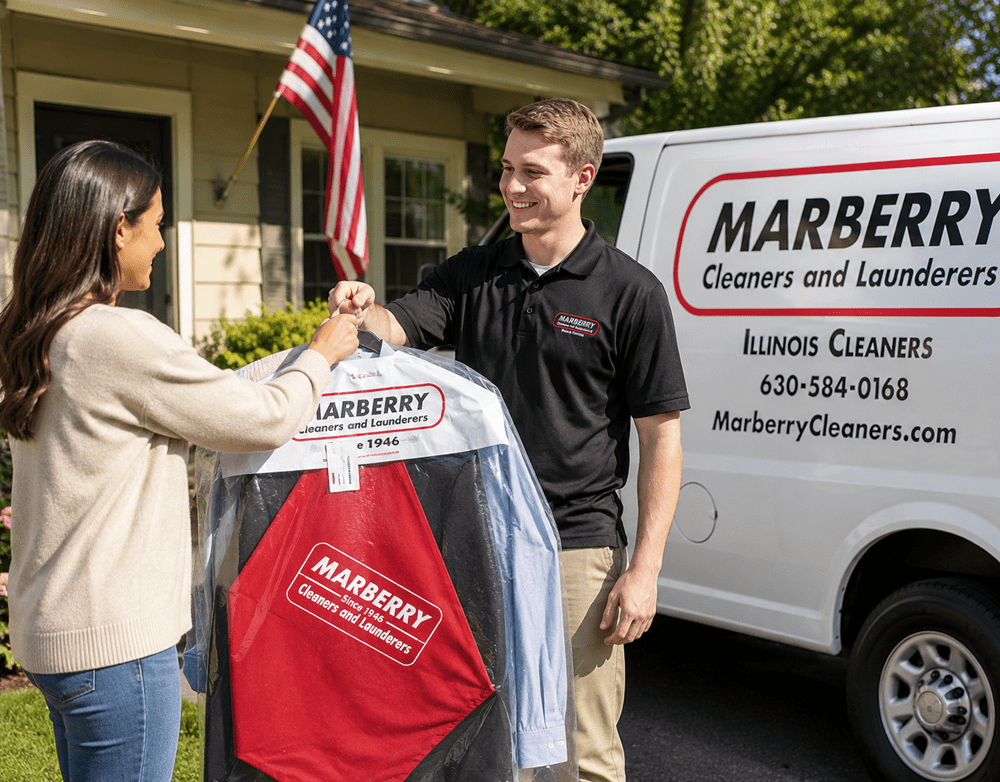
At Marberry Cleaners and Launderers, we combine advanced PERC-free cleaning methods, fabric safe processes, and decades of garment care expertise to help preserve delicate fabrics, maintain vibrant colors, and keep your clothing looking polished wear after wear.
Schedule your first FREE Pickup and Delivery Service with Marberry Cleaners and Launderers today and trust our team to professionally care for everything from business attire and silk blouses to designer garments and formalwear.
Contact Marberry Cleaners and Launderers today, or schedule your eco-friendly dry cleaning services today!
Marberry Cleaners and Launderers:
📧 customerservice@marberrycleaners.com
🕒 Monday through Friday, 7:00 AM to 6:00 PM | Saturday, 8:00 AM to 2:00 PM | Sunday: Closed
Related Articles from the same category:

Copyright © 2026 All Rights Reserved.
Designed by Cleaner Marketing